
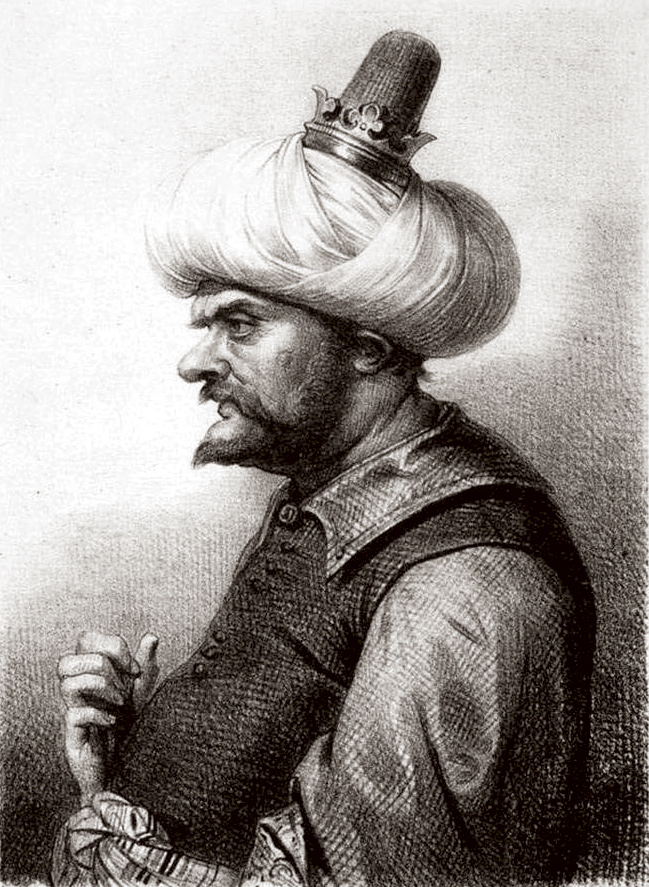
Oruç Reis (Turkish: Oruç Reis; Arabic: عروج ريس; Spanish: Arrudye; c. 1474–1518) was an Ottoman bey (governor) of Algiers and beylerbey (chief governor) of the West Mediterranean, and the elder brother of Hayreddin Barbarossa. He was born on the Ottoman island of Midilli (Lesbos in modern Greece) and was killed in battle against the Spanish at Tlemcen in the Ottoman Eyalet of Algeria. He became known as Baba Oruç or Baba Aruj (Father Oruç) when he transported large numbers of Morisco, Muslim and Jewish refugees from Spain to North Africa; he was known in folk etymology in Europe as Barbarossa (which means Redbeard in Italian)

His father, Yakup Ağa, was an Ottoman official of Albanian descent. Yakup Ağa took part in the Ottoman conquest of Lesbos (Midilli) from the Genoese in 1462, and as a reward, was granted the fief of the Bonova village in the island. He married a local Christian Orthodox Greek woman from Mytilene, the widow of a Greek Orthodox priest, named Katerina, and they had two daughters and four sons: Ishak, Oruç, Hizir and Ilyas. Yakup became an established potter and purchased a boat to trade his products. The four sons helped their father with his business, but not much is known about the daughters. At first Oruç helped with the boat, while Hizir helped with pottery.
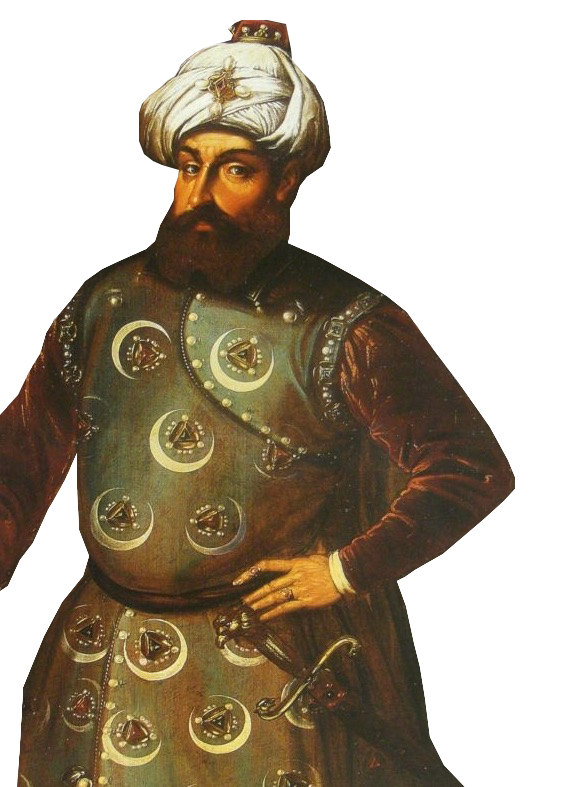
All four brothers became seamen, engaged in marine affairs and international sea trade. Oruç was the first brother to be involved in seamanship, soon joined by the youngest brother Ilyas. Hizir initially helped their father in the pottery business, but later obtained a ship of his own and also began a career at sea. Ishak, the eldest, remained on Mytilene and was involved with the financial affairs of the family business. The other three brothers initially worked as sailors, but then turned privateers in the Mediterranean, counteracting the privateering of the Knights Hospitaller of the Island of Rhodes.[citation needed] Oruç and Ilyas operated in the Levant, between Anatolia, Syria and Egypt, while Hızır operated in the Aegean Sea and based his operations mostly in Thessaloniki. Oruç was a very successful seaman. He also learned to speak Italian, Spanish, French, Greek and Arabic in the early years of his career. While returning from a trading expedition in Tripoli, Lebanon, he and Ilyas were attacked by a galley of the Knights Hospitaller. Ilyas was killed in the fight, and Oruç was wounded. Their father's boat was captured, and Oruç was taken prisoner and detained in the Knights' Bodrum Castle for nearly three years. Upon learning the location of his brother, Hizir went to Bodrum and managed to help Oruç escape
All four brothers became seamen, engaged in marine affairs and international sea trade. Oruç was the first brother to be involved in seamanship, soon joined by the youngest brother Ilyas. Hizir initially helped their father in the pottery business, but later obtained a ship of his own and also began a career at sea. Ishak, the eldest, remained on Mytilene and was involved with the financial affairs of the family business. The other three brothers initially worked as sailors, but then turned privateers in the Mediterranean, counteracting the privateering of the Knights Hospitaller of the Island of Rhodes.[citation needed] Oruç and Ilyas operated in the Levant, between Anatolia, Syria and Egypt, while Hızır operated in the Aegean Sea and based his operations mostly in Thessaloniki. Oruç was a very successful seaman. He also learned to speak Italian, Spanish, French, Greek and Arabic in the early years of his career. While returning from a trading expedition in Tripoli, Lebanon, he and Ilyas were attacked by a galley of the Knights Hospitaller. Ilyas was killed in the fight, and Oruç was wounded. Their father's boat was captured, and Oruç was taken prisoner and detained in the Knights' Bodrum Castle for nearly three years. Upon learning the location of his brother, Hizir went to Bodrum and managed to help Oruç escape.
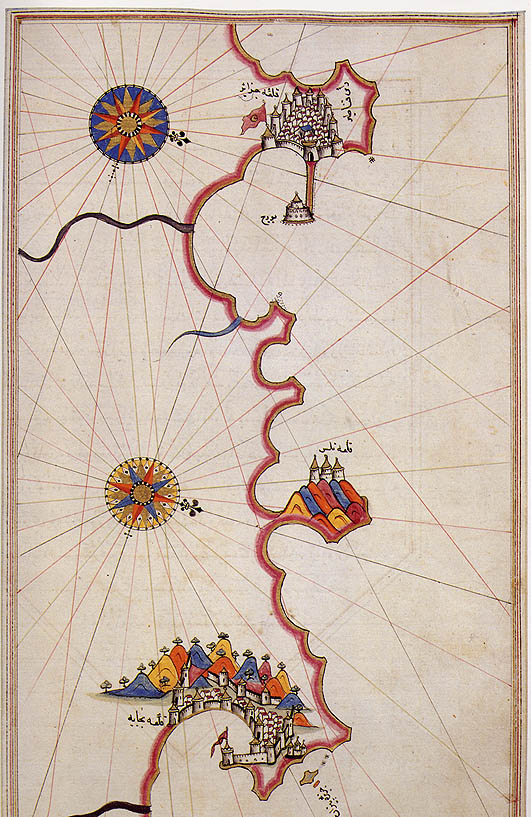
In 1516 the three brothers succeeded in liberating Jijel and Algiers from the Spaniards, but eventually assumed control over the cities and surrounding region, forcing the previous ruler, Abu Hammu Musa III of the Zayyanid dynasty, to flee. The local Spaniards in Algiers sought refuge in the island of Peñón near Algiers and asked Emperor Charles V, King of Spain, to intervene, but the Spanish fleet failed to force the brothers out of Algiers. After consolidating his power and declaring himself the new Sultan of Algiers, Oruç sought to enhance his territory inlands and took Miliana, Medea and Ténès. He became known for attaching sails to cannons for transport through the deserts of North Africa. In 1517 the brothers raided Capo Limiti and later the Island of Capo Rizzuto in Calabria.
For Oruç the best protection against Spain was to join the Ottoman Empire, his homeland and Spain's main rival. For this he had to relinquish his title of Sultan of Algiers to the Ottomans. He did this in 1517 and offered Algiers to the Ottoman Sultan. The Sultan accepted Algiers as an Ottoman Sanjak (province), appointed Oruç as the Bey (Governor) of Algiers and Beylerbey (Chief Governor) of the West Mediterranean, and promised to support him with janissaries, galleys and cannons.
The Spaniards ordered Abu Zayan, whom they had appointed as the new ruler of Tlemcen and Oran, to attack Oruç by land, but Oruç learned of the plan and pre-emptively struck against Tlemcen, capturing the city and executing Abu Zayan in the Fall of Tlemcen (1517). The only survivor of Abu Zayan's dynasty was Sheikh Buhammud, who escaped to Oran and called for Spain's assistance. In May 1518, Emperor Charles V arrived at Oran and was received there by Sheikh Buhammud and the Spanish governor of the city, Diego de Córdoba, Marquess of Comares, who commanded a force of 10,000 Spanish soldiers. Joined by thousands of Bedouins, the Spaniards marched overland on Tlemcen where Oruç and Ishak awaited them with 1,500 Turkish and 5,000 Moorish soldiers. They defended Tlemcen for 20 days, but were eventually killed in combat by the forces of Garcia de Tineo. The last remaining brother, Hizir Reis, inherited his brother's place, his name (Barbarossa) and his mission.
Oruç established the Ottoman presence in North Africa which lasted four centuries, de facto until the loss of Algeria to France in 1830, of Tunisia to France in 1881, of Libya to Italy in 1912 and de jure until the official loss of Egypt and Sudan to the United Kingdom in 1914, after the Ottoman Empire joined World War I on the side of the Central Powers. The Republic of Turkey officially renounced the remaining disputed Turkish rights in some territories of Egypt and Sudan with the Treaty of Lausanne in 1923. Three submarines (TCG Oruç Reis, TCG Oruçreis (S-337), and TCG Oruçreis (RAD-14)) of the Turkish Navy have been named after Oruç.
Source: Wikipedia
Creative Director: Claire Huang
Designer: Patrick Zhou